
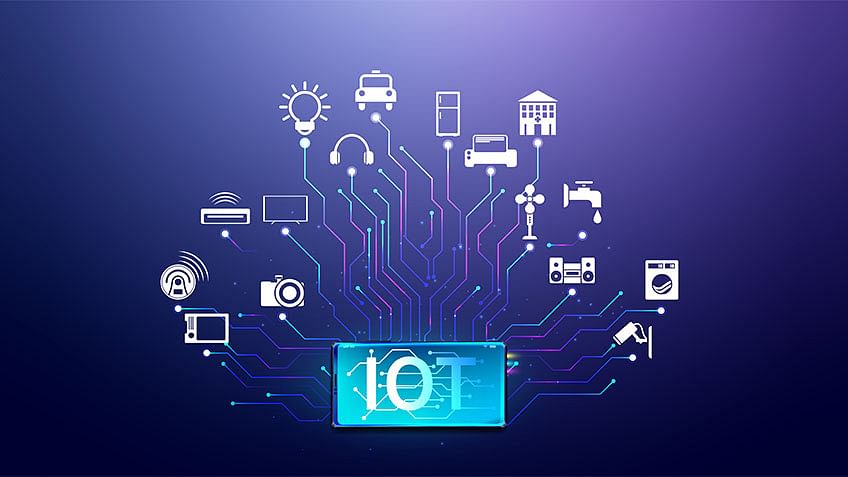
The Internet of Things (IoT) is no longer a futuristic concept—it’s the digital backbone reshaping how we live, work, and interact with the world.
More industries keep using IoT solutions every year, and experts think this market will grow to $629.5 billion by 2025, growing about 17.5% each year (The Business Research Company).
As the IoT continues to develop, its most significant impact is seen in the transformation of houses into smart living spaces. These homes can anticipate occupants’ needs, optimize energy consumption, and enhance security, all while integrating into everyday routines. In this blog, we will explore how IoT home automation works, why it is important, and how to choose the best IoT devices for a smart home.

Understanding IoT Home Automation
IoT home automation is all about making your life easier. By connecting everyday devices like lights, thermostats, and security systems to the internet, you can control them remotely or set them to work automatically.
Key components:
- Sensors: Detect changes in environment (motion, temperature, light).
- Actuators: Execute physical actions (locking doors, adjusting blinds).
- Central Hub/Gateway: Coordinates device communication (e.g., Samsung SmartThings).
- Cloud Platform: Stores data and enables remote access (AWS IoT, Google Cloud IoT).
- User Interface: Mobile apps, voice assistants (Alexa, Siri), or dashboards.

The future of smart home system: key trend in 2025
Smart homes are changing fast, with everything from AI-powered helpers to smarter security systems. Experts predict the worldwide smart home market will achieve $135 billion by 2025. This growth comes from better internet connections, adding AI features, and using more eco-friendly tech.
So, what’s next for smart home technology? Let’s explore the key trends that will shape the future of home automation.
1.AI Integration in IoT (AIoT)
The combination of both—termed AIoT—enables smarter, autonomous systems. Artificial intelligence is making smart home systems more intuitive and responsive. Virtual assistants like Amazon Alexa, Google Assistant, and Apple HomeKit are evolving to provide personalized automation.
How AI is Enhancing Smart Homes
- AI-powered assistants can learn user habits and automate lighting, heating, and entertainment systems.
- Natural language processing (NLP) improves voice recognition, making interactions smoother.
- AI-driven predictive maintenance alerts homeowners about potential appliance failures before they happen.
Example:
Google’s Nest Thermostat uses AI to learn household routines and optimize energy usage, reducing electricity bills.
Key Benefits:
- Personalized automation
- Improved voice control accuracy
- Energy savings through AI-driven adjustments

2.Smart Home Security: Smart Surveillance and AI Detection
Security is a top priority for homeowners, and smart home security solutions are becoming more advanced. AI-powered cameras, facial recognition, and real-time threat detection are transforming home security.
New Security Innovations
- AI-driven cameras differentiate intruders from pets using motion patterns, reducing false alarms by 90%.Biometric locks replace traditional keys for added security.
- Cloud-based monitoring systems enable remote access from anywhere.
- Smart locks use fingerprint, facial, or vein recognition for keyless entry.
- Blockchain encrypts footage, ensuring user-exclusive access.
Example:
YOURLITE’s AI-powered video doorbells now differentiate between people, animals, and vehicles, reducing false alarms.
Key Benefits:
- Enhanced threat detection
- Remote monitoring via mobile apps
- Integration with police and emergency services

3.5G-Powered Smart Homes for Faster Connectivity
With the rollout of 5G networks, smart homes will experience faster, more reliable connections. This technology will enable real-time data transfer between devices and improve automation efficiency.
How 5G Enhances Smart Homes
- Reduces latency, ensuring faster response times for voice commands.
- Supports high-bandwidth applications like 4K video streaming and AR/VR home setups.
- Enhances remote control of home appliances without lag.
- Massive IoT Device Support. 5G’s ability to handle 1 million devices per square kilometer ensures stable connectivity even in device-dense smart homes
Feature | Impact on Smart Homes | Real-World Example |
Ultra-Fast Speeds | Enable 4K security feeds & instant firmware updates | Amazon Ring Cameras stream 4K footage via 5G without buffering. |
Reliable IoT Communication | Ensures stability in automation | Adjust Nest thermostats remotely via 5G with zero lag. |
AR/VR Integration | Enables immersive home experiences | AR home design apps (e.g., IKEA Place) render 3D furniture in real time. |

4.Sustainable Smart Homes: Energy Efficiency and Green Tech
Sustainability is a growing concern, and smart home technology is shifting toward energy-efficient solutions. Home automation now includes smart energy monitoring, solar power integration, and water conservation tools.
Eco-Friendly Smart Home Trends
- AI manages solar panels and battery systems to prioritize renewable energy use.
- Smart irrigation controls optimize water usage for gardens.
- Smart thermostats adjust temperature based on occupancy and weather conditions.
- Recyclable materials and energy-efficient devices minimize environmental impact.
Key Benefits:
- Reduced energy bills
- Reduced carbon footprint.
- Automated energy optimization
5. Health and Wellness Tech in Smart Homes
Wellness-focused smart devices are gaining popularity, helping homeowners monitor their health, air quality, and sleep patterns.
Health-Centric Smart Home Devices
- Air Quality Guardians: Purifiers detect pollutants and sync with wearables to protect sensitive users.
- AI mirrors and analyzes health metrics and connects users to doctors.
- Smart lamps change the light according to the human circadian rhythm
Key Benefits:
- Improved indoor air quality
- Better sleep and relaxation
- AI-powered health monitoring

How to Choose the Best IoT Devices for a Smarter Home
IoT devices open up many opportunities, but it’s easy to get lost in the excitement of new technologies. Before you jump into the IoT marketplace, it’s important to approach it with a clear plan.
1.Prioritize Compatibility
A fragmented ecosystem of incompatible devices leads to frustrating user experiences, duplicated costs, and limited automation potential.
Key Considerations:
- Platform Agnosticism:
Opt for devices that integrate with multiple ecosystems (e.g., Amazon Alexa, Google Assistant, Apple HomeKit). For example, the Philips Hue Smart Bulb works seamlessly across all major platforms, allowing flexibility if you switch ecosystems later.
- Protocol Standards:
Choose devices supporting universal protocols like Matter, a new industry standard backed by Apple, Google, and Amazon. Matter-enabled devices (e.g., YOURLITE Door & Window Sensor) ensure cross-brand compatibility and reduce reliance on proprietary hubs.
- Legacy System Support:
If retrofitting an older home, select devices compatible with Z-Wave or Zigbee protocols, which use low-power mesh networks ideal for large spaces.
2.Assess Security Features
Poorly secured IoT devices are prime targets for hackers, risking data breaches or unauthorized access to your home network.
Key Considerations:
- End-to-End Encryption:
Prioritize devices with AES-128 encryption or higher. For example, Apple HomeKit Secure Video encrypts footage before uploading it to iCloud, preventing third-party interception.
- Regular Firmware Updates:
Brands like TP-Link and Arlo automatically push security patches to fix vulnerabilities. Avoid devices that lack update commitments.
- Local Data Processing:
Devices that process data locally (e.g., YOURLITE Motion Sensor) minimize exposure to cloud-based attacks.
- Red Flags:
No option to disable cloud storage.
Vague privacy policies about data sharing.
3.Evaluate User Experience
Complex setups or clunky interfaces can turn a “smart” home into a daily hassle.
Key Considerations:
- Ease of Installation:
Look for plug-and-play devices requiring minimal technical skills. For instance, the YOURLITE Visual doorbell connects to Wi-Fi in minutes via a smartphone app.
- Voice and App Control:
Ensure devices support voice commands (e.g., “Hey Google, turn off the lights”) and have intuitive apps. The Google Nest Hub offers a unified dashboard for managing all connected devices.
- Automation Flexibility:
Advanced users should prioritize platforms like Home Assistant, which allow custom automation rules (e.g., “If motion is detected after sunset, turn on lights”).
4.Balance Cost and Value
Start by identifying what you want to accomplish. Are you trying to save on energy bills, improve security, or automate certain tasks? Overpaying for unnecessary features or underspending on critical components can derail your smart home goals.
Key Considerations:
- Long-Term Savings:
Energy-efficient devices like the Ecobee Smart Thermostat can cut HVAC costs by 20-30%, offsetting their higher upfront price.
- Avoid Feature Bloat:
A basic Smart Plug are worth it only if you need detailed usage data.
- Subscription Costs:
Some security cameras (e.g., Ring Doorbell) require monthly fees for cloud storage.

5.Check Scalability
A scalable system grows with your needs without requiring costly replacements.
Key Considerations:
- Modular Ecosystems:
Platforms like Samsung SmartThings allow adding sensors, cameras, and locks incrementally. Their Aeotec Hub supports 200+ devices.
- Future-Proof Connectivity:
Choose Wi-Fi 6 or 5G-enabled devices to handle bandwidth-heavy tasks like 4K streaming or AR/VR integration.
- API Access:
Open APIs (e.g., IFTTT integration) let advanced users create custom workflows, such as syncing smart lights with weather apps.
6.Read Reviews and Certifications
Independent reviews and certifications reveal real-world performance and safety risks.
Key Considerations:
- User Feedback:
Platforms like Reddit’s r/smarthome or Amazon Verified Reviews highlight reliability issues. For example, early Wyze Cam models faced criticism for frequent disconnections.
- Industry Certifications:
Look for UL Certification (safety), Energy Star (efficiency), or ioXt Alliance labels (security).
- Warranty or Return Policy.
Verify warranty terms (typically 1-3 years) and return policies before purchase, as they reflect manufacturer confidence in product durability.
7.Sustainability Considerations
Eco-friendly IoT devices reduce energy bills and environmental impact.
Key Considerations:
- Recyclable Materials:
Brands like IKEA design smart products (e.g., TRÅDFRI LED Bulbs) with recyclable components and minimal packaging.
- Low-Power Modes:
Devices with Zigbee 3.0 protocols consume less energy and support battery-free sensors.
- Pro Tip:
Use solar-powered outdoor devices (e.g., Ring Solar Pathlight) to eliminate wiring and battery waste.
8.Look for Future-Proof Devices
Technology moves fast, so make sure your IoT devices won’t be outdated in a year. Here’s what to look for:
- Regular Firmware Updates: Ensure the company regularly releases updates to improve features and security.
- Industry Standards: Stick to devices that use widely-adopted communication standards (like LoRaWAN) to ensure they’ll work with future devices.
Choosing devices with long-term support means fewer headaches and a longer life for your investment.
Choosing the right IoT solutions isn’t about having the latest gadgets — it’s about getting devices that make your life easier, more efficient, and future-ready.
By focusing on compatibility, ease of use, reliability, and scalability, you can build a smart home system that suits your specific needs and can grow with you. Solutions like those from YOURLITE ensure you get long-lasting, efficient, and easy-to-use devices that integrate seamlessly into your daily life.

FAQ
What is a home IoT device?
A home IoT device is a connected gadget that automates tasks, collects data, or interacts with other devices through embedded sensors, software, and internet connectivity. Examples include smart speakers (Amazon Echo), thermostats (Google), and security cameras (Arlo). Key features:
- Adaptability: Learns user habits (e.g., adjusting lights based on routines).
- Interoperability: Works with ecosystems like Apple HomeKit or Samsung SmartThings.
- Remote Control: Managed via apps or voice commands from anywhere.
How to make a smart home using IoT?
Follow this streamlined approach:
- Start with a hub: Choose a central controller like Amazon Echo (for Alexa) or Apple HomePod Mini (for HomeKit).
- Prioritize essentials: Begin with smart lights (Philips Hue) and plugs (TP-Link Kasa) for easy automation.
- Secure your network: Use a dedicated Wi-Fi 6 router and enable WPA3 encryption.
- Expand gradually: Add security devices (e.g., Eufy cameras) and climate control (Ecobee thermostat).
- Automate routines: Set up “Good Night” scenes to lock doors, dim lights, and arm alarms via apps like Google Home.
What is an example of IoT in the home?
IoT in the home can be seen in devices like smart light and temperature sensors that adjust the temperature based on your preferences and habits. Another example is smart sensor that you can control remotely from your smartphone.
A prime example of IoT innovation in smart homes is the 360-Degree Range Smart PIR Motion Sensor. This advanced sensor is installed in key areas of the home such as entryways, hallways, or patios, and utilizes passive infrared technology to detect movement in all directions. When motion is detected, the sensor immediately triggers connected smart devices like lights or security systems, while simultaneously sending real-time alerts to the homeowner’s smartphone. This comprehensive detection and automation system demonstrates how IoT technology enhances both home security and energy efficiency, providing peace of mind and convenience whether residents are present or away.
The sensor’s 360-degree coverage ensures no blind spots, while its smart integration capabilities allow for customized automation scenarios – such as turning on pathway lighting when approaching the house at night, or activating security cameras when unexpected movement is detected during the day. This combination of full-range detection and intelligent response capabilities exemplifies how modern IoT solutions are transforming passive homes into proactive, intelligent living spaces.


