
By 2025, AI lighting has become a practical reality. From homes to offices and city streets, intelligent systems learn from behavior, respond to real-time conditions, and adjust automatically to improve comfort, efficiency, and safety. Lighting has moved beyond switches and fixed schedules, reacting instead to occupancy, daylight, and context. This shift marks a turning point for the industry.
In the following sections, we’ll take a closer look at 5 key AI lighting trends shaping the market in 2026.

1.Optimizing Health & Well-being with AI Light
Human-centric lighting has become one of the most influential AI lighting trends as users increasingly prioritize wellness, comfort, and productivity. Unlike traditional smart lighting that relies on manual presets, AI-powered human-centric lighting systems automatically adapt to human biological rhythms and daily activities.
How It Works:
- Data Collection & Analysis: Sensors gather real-time environmental data (e.g., daylight intensity, occupancy). AI analyzes this alongside the time and pre-programmed wellness goals.
- Dynamic Spectrum & Intensity Adjustment: The system automatically adjusts not just brightness, but the CCT and even specific spectral power distribution. In the morning, it emits cooler, bluer-white light to suppress melatonin and boost alertness. As evening approaches, it seamlessly shifts to warmer, amber tones to promote relaxation and prepare the body for sleep.
- Personalization & Learning: Advanced systems can learn individual or space-specific patterns, tailoring the lighting environment for peak productivity in an office, accelerated recovery in a healthcare setting, or improved learning outcomes in a classroom.
In 2026, this trend is expanding beyond residential use into offices, hospitality, and healthcare spaces, where lighting directly impacts well-being and performance. AI-driven human-centric lighting not only enhances user experience, but also helps businesses improve productivity, occupant satisfaction, and overall space quality.

2. Emotional AI and Interactive Smart Lighting
Illumination transforms from a utility into an intelligent, empathetic interface.
Natural Language Understanding (NLU):
Powered by large language models, they can interpret intent and context from casual speech. Saying, “I feel like reading a novel in a cozy English library,” could trigger the AI to instantly craft a lighting scene with warm, focused amber tones and softer peripheral glow, pulling parameters for “coziness,” “focus,” and “warmth” from its database.
Affective Computing & Color Psychology:
AI systems now integrate databases built on color psychology research, which quantifies how specific hues, saturations, and intensities influence human emotion. For instance, an AI doesn’t just turn a room “blue”; it selects a specific low-saturation cerulean to induce calm, or a vibrant cyan to stimulate clarity. This allows for the translation of abstract emotional requests into precise, scientifically-informed light formulas.
Ambient Intelligence & Proactive Interaction:
By learning routines and sensing presence, the system can proactively suggest or enact changes. click for more details
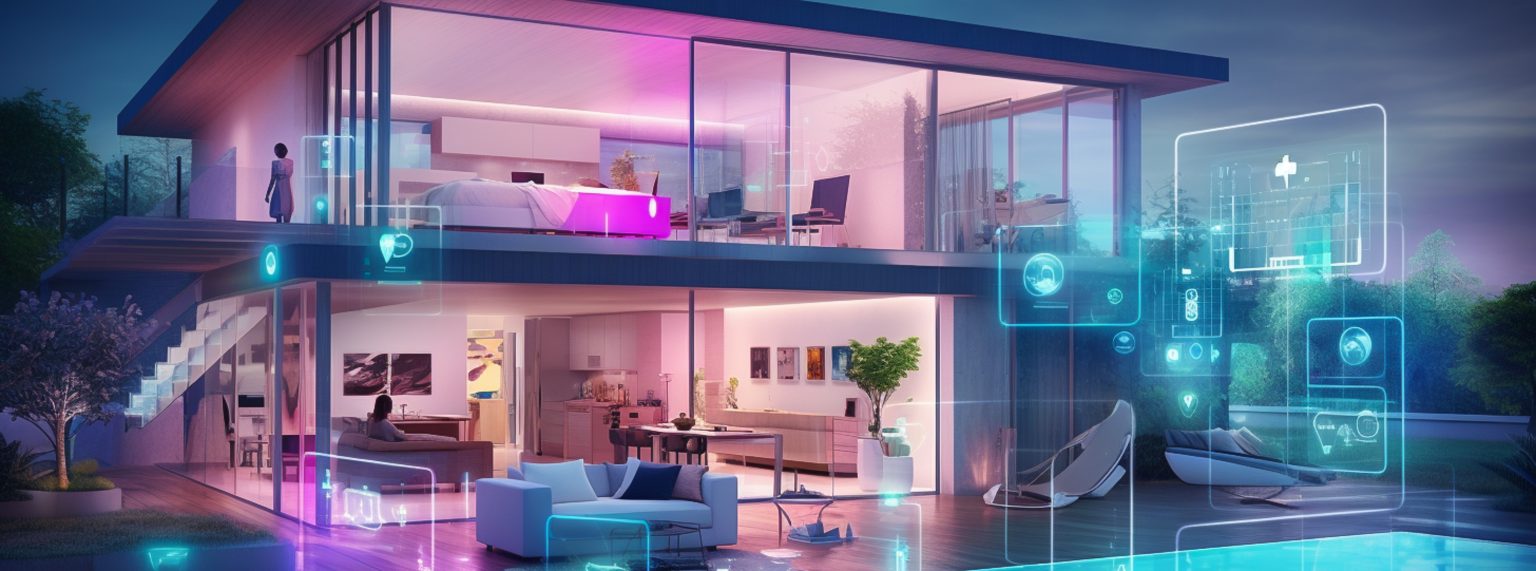
3.Proactive and Self-Learning AI Lighting Systems
- Edge AI and Decentralised Processing:
By embedding processing power into each luminaire, systems can make ultra-fast, local decisions (like turning on for an approaching person) without waiting for a cloud command. This reduces latency, increases reliability, and protects privacy.
- “Swarm Intelligence” for Collective Optimisation:
Inspired by nature, this is where individual “smart” lights communicate with their neighbours. They share data (like motion detection) and work as a collective to optimise an entire area. For example, in a parking garage, lights can track a vehicle’s movement, illuminating its path ahead while dimming the area it left behind, ensuring safety while maximising energy savings.
Feature | Traditional Automated Lighting | Proactive & Self-Learning Lighting |
Core Logic | Rule-based, static schedules | AI-driven, dynamic models |
Adaptation | Manual re-programming required | Autonomous, continuous learning |
Architecture | Centralised hub-and-spoke | Decentralised mesh network |
Primary Goal | Basic energy saving, convenience | Predictive optimisation, personalised environments |
Response to Change | Reactive to triggers | Anticipatory and context-aware |

4. AI-Driven Energy Optimization & Sustainability
As sustainability regulations tighten globally, AI-powered lighting systems have evolved from a convenience to a critical tool for energy management and regulatory compliance. Their role extends far beyond simple automation.
- Core Energy-Saving Mechanism:
At its core, AI lighting achieves significant efficiency gains through intelligent, context-aware optimization. By utilizing data from sensors and schedules to enable auto-dimming and adaptive lighting, it reduces electricity consumption during off-peak or unoccupied periods, directly lowering operational carbon footprints.
- Integration Value:
These systems provide value beyond the building itself by supporting the broader energy ecosystem. This helps reduce peak strain, supports demand-response programs, and, in a broader sense, contributes to a more stable and resilient power grid. In that way, lighting becomes part of the energy infrastructure.
- Navigating the New Regulatory Landscape:
The European Union’s AI Act, effective from 2024, introduces strict requirements for AI system transparency, risk management, and performance documentation. Meanwhile, in the United States, lawmakers are proposing new frameworks that require reporting on the environmental impact of AI systems, including metrics such as energy consumption and water usage during operation.

5. Smarter Cities & Buildings: AI Lighting as Urban Infrastructure
- Dynamic and Efficient Public Lighting:
Projects like the Smart Dynamic Public Lighting (SDP) pilot in Regensburg, Germany, showcase this at the street level. AI-driven luminaires equipped with optical sensors detect and classify pedestrians and cyclists in real-time. The system provides bright light precisely where and when it’s needed, dimming to a minimum when areas are unoccupied. This not only saves energy but also reduces light pollution for residents and nocturnal insects.
- The Building’s “AI Energy Butler”:
At the building scale, AI acts as a 24/7 operational brain for energy management. Companies like Schneider Electric are deploying generative AI “co-pilots” (e.g., EcoStruxure Building GPT) that use large language models and knowledge graphs to understand natural language commands, diagnose system faults, and generate optimized control strategies for HVAC and lighting, aiming to significantly cut operational time and energy use.
- Generative AI:
Leading technology frameworks, such as NVIDIA’s blueprint for smart city AI, demonstrate how generative AI and digital twins are revolutionizing planning. Cities and tech partners are deploying AI agents within highly accurate virtual replicas of urban environments to test, optimize, and manage infrastructure before and after it’s built.

FAQ
Q: How is AI lighting different from smart LED lights?
The biggest difference is that AI lighting can learn and adapt. Regular automatic lights follow a fixed rule, like turning on when they sense motion. AI lighting is smarter. It slowly learns the daily habits of a space (like when it’s busiest) and adjusts the light proactively, before you even need to ask. It doesn’t just react; it predicts.
Q2: Do these smart lights collect a lot of data? How is my privacy protected?
This is a very important concern. Good systems prioritize your privacy. Many now use local data processing, which means information about activity in your room is handled mainly within the light fixture or a local hub, and isn’t freely sent over the internet. When choosing a product, look for brands that are clear about their data policies and use strong security.
Q3: What is a simple way to start using AI lighting technology
Starting with a single, important space is the best approach. You could upgrade a key meeting room at your office or the study room at home. Try basic features first, like lights that automatically adjust brightness with natural daylight. This lets you see the benefits and get feedback on a small scale before expanding.


